

Advertisement:
With over 25 years of experience as a business consultant, Abdul Vasi has helped countless brands grow and thrive. As a successful entrepreneur, tech expert, and published author, Abdul knows what it takes to succeed in today’s competitive market.
Whether you’re looking to refine your strategy, boost your brand, or drive real growth, Abdul provides tailored solutions to meet your unique needs.
Get started today and enjoy a 20% discount on your first package! Let’s work together to take your business to the next level!
Most content strategies are built on a lie. The lie is that you can game a system that gets smarter every day.
By 2026, the gap between those who understand this and those who don’t will be a canyon. The old playbooks are already dead.
This is your guide to building something real. This is about a new approach to Content Writing and Strategy for SEO that works with the machines, not against them.
The Problem
Most businesses fail at Content Writing and Strategy for SEO because they start with the wrong question. They ask, “What keywords should we target?”
That’s like asking which paint color will fix a crumbling wall. The foundation is rotten. They treat content as a commodity, a box to tick for Google.
They hire cheap writers to fill a spreadsheet. They chase trends without context. The result is a graveyard of blog posts that no human reads and Google increasingly ignores.
They focus on volume over signal. Ten generic articles won’t beat one definitive answer. In 2026, this scattergun approach is a fast track to irrelevance.
Here’s what happened with one of my clients. They were a B2B SaaS company with a “content machine” pumping out 20 pieces a month. Their traffic was flatlining.
I asked them to show me their top 10 most-read articles from the past year. They couldn’t. They had no idea what resonated. They were writing for search volume, not for their specific, high-intent customer.
We stopped everything. We spent two weeks just talking to sales and support. We found three core problems their customers repeatedly faced. We created one massive, interactive guide for each. Traffic didn’t just grow; qualified leads doubled in six months. That’s the power of real Content Writing and Strategy for SEO.
The Strategy
Forget the funnel. Think about the conversation. Your strategy must map to the real questions your buyers have, in their language.
Step one is ruthless prioritization. You cannot be everywhere. Identify the one niche where you can be the undisputed expert. Own that conversation completely.
Step two is depth over breadth. For your chosen niche, create the single best resource on the internet. I call this the “Cornerstone Asset.” It should be so good it becomes the cited source.
Step three is the content orbit. Build smaller, supportive pieces that link back to your cornerstone. Answer tangential questions, provide updates, and offer new angles. This creates a topic ecosystem.
Step four is the feedback loop. Instrument everything. Track not just clicks, but time spent, scroll depth, and which sections are shared. Let this data inform your next cornerstone.
Step five is distribution as creation. Don’t just publish and pray. Plan how you will atomize this content. Which snippet becomes a LinkedIn carousel? Which data point becomes a tweet? Bake this into the writing process.
Explore Abdul Vasi's Books on Amazon
 Entrepreneurship Secrets for Beginners
Gain insights into launching and running a successful business from scratch.
Entrepreneurship Secrets for Beginners
Gain insights into launching and running a successful business from scratch.
 The Social Media Book
Explore the benefits, challenges, and impact of social media on today’s world.
The Social Media Book
Explore the benefits, challenges, and impact of social media on today’s world.
 Tranquility
Discover pathways to inner peace and resilience in a chaotic world.
Tranquility
Discover pathways to inner peace and resilience in a chaotic world.
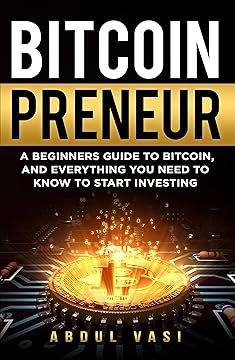 Bitcoinpreneur
A beginner's guide to understanding and investing in Bitcoin and cryptocurrencies.
Bitcoinpreneur
A beginner's guide to understanding and investing in Bitcoin and cryptocurrencies.
“In 2026, the best Content Writing and Strategy for SEO won’t feel like marketing. It will feel like a public service. Your goal isn’t to rank; it’s to become the standard reference for a specific problem. Ranking is just the byproduct.”
Abdul Vasi, Digital Strategist
Amateur vs Pro: The Content Divide
| Aspect | Amateur Approach | Pro Approach |
|---|---|---|
| Foundation | Starts with keyword research tools and competitor analysis. | Starts with customer interviews, sales calls, and support tickets. |
| Content Goal | To rank for a high-volume term. | To definitively solve one specific, high-intent problem. |
| Measurement | Traffic and rankings. Vanity metrics. | Engagement depth, lead quality, and citation by other authorities. |
| Production | High volume of short, generic posts. | Lower volume of deep, multi-format cornerstone assets. |
| Mindset | “We need content for SEO.” | “We need to own this conversation in our industry.” |
Advanced Tactics for 2026
First, build for AI agents. By 2026, a significant chunk of “search” will be AI summaries. Your content must be structured so these agents can easily extract and cite it as the best source. Use clear schema, definitive statements, and logical hierarchies.
Second, master interactive authority. A static PDF guide is weak. Build interactive calculators, configurators, or diagnostic tools. Google rewards experiences that provide unique value and keep users engaged. This is your moat.
Third, orchestrate “social proof loops.” When you publish a cornerstone asset, proactively get it in front of micro-influencers in your niche. Not for a generic shoutout, but for a specific, critique-oriented review. The debate and discussion it generates are pure ranking fuel.
Frequently Asked Questions
Q: How long should my cornerstone content be?
As long as it needs to be to be the best. That could be 3,000 or 10,000 words. Worry about completeness, not word count. It’s done when no reasonable person would need another source.
Q: Is keyword research dead for Content Writing and Strategy for SEO?
No, but its role has changed. Use it to understand language and question clusters, not as a primary directive. Let customer insight drive topics; use keywords to polish the language.
Q: How do I measure ROI on this deep content approach?
Track cost per qualified lead, not cost per article. A single cornerstone asset that brings in 50 high-value leads per month for two years has an ROI that crushes 100 forgettable blog posts.
Q: Can I outsource this kind of Content Writing and Strategy for SEO?
You can outsource the writing, never the strategy or the deep subject matter expertise. The writer must be embedded in your world, interviewing your team and understanding the nuance.
Q: How often should I publish new content?
Publish when you have something definitive to say. A relentless, empty calendar is the enemy of quality. Focus on maintaining and updating your existing cornerstone assets regularly.
Conclusion
The race to the bottom in content is over. The winners in 2026 are already shifting gears. They are moving from content marketing to knowledge publishing.
This isn’t about more tips or hacks. It’s about a fundamental shift in perspective. Your Content Writing and Strategy for SEO must be built on a foundation of real expertise and a desire to solve, not just to be seen.
Start with one conversation. Own it completely. The algorithms will follow the authority you build with people. That’s the only strategy that lasts.
Ready to Transform Your Digital Strategy?
Let’s discuss how I can help your business grow. 25+ years of experience, one conversation away.
