

Advertisement:
With over 25 years of experience as a business consultant, Abdul Vasi has helped countless brands grow and thrive. As a successful entrepreneur, tech expert, and published author, Abdul knows what it takes to succeed in today’s competitive market.
Whether you’re looking to refine your strategy, boost your brand, or drive real growth, Abdul provides tailored solutions to meet your unique needs.
Get started today and enjoy a 20% discount on your first package! Let’s work together to take your business to the next level!
Quick Answer:
In 2026, the difference between PPC and Google Ads is the difference between a strategy and a single tool. PPC (Pay-Per-Click) is the overarching strategy of paying for targeted traffic across dozens of platforms, from social networks to connected TV. Google Ads is just one of those platforms, albeit a major one. The real shift is that a successful PPC strategy in 2026 must integrate Google Ads with at least 3-4 other channels to work effectively.
The Question You’re Really Asking
Youre sitting there, looking at your marketing budget, and youre confused. Your team is talking about PPC and Google Ads like theyre the same thing. Your reports are a mess. And youre wondering why the money youre spending isnt working like it used to.
I get it. Ive had that exact conversationhundreds of times. The confusion between PPC and Google Ads isnt just semantics. Its the root cause of wasted budgets and missed opportunities. Youre asking for definitions, but what you really want to know is: where should I put my money to actually get customers in 2026? Lets start by clearing up the fog.
Why Most PPC and Google Ads Efforts Fail
They fail because people treat Google Ads as if its the entire game. Its not. It hasnt been for years, but by 2026, that mindset is a straight path to bankruptcy.
Heres what happens. A business owner hears PPC and immediately thinks, I need to run Google Ads. They pour everything into search campaigns. They hire someone to manage their Google Ads. And for a while, maybe it works. Then, slowly, the cost per click creeps up. The competition gets smarter. And theyre left bidding on the same expensive keywords as everyone else, wondering where the profit went.
The failure is one of scope. Youre bringing a knife to a gunfight, but the gunfight is now in virtual reality. PPC in 2026 is about orchestrationusing Google Ads for intent, but using other platforms for awareness, retargeting, and closing. Putting all your chips on one square is a rookie mistake. And its the most expensive one you can make.
A founder I worked with last year was spending 4 lakh a month on Google Search Ads. He was convinced it was his only channel for high-quality leads. His business was growing, but his ad spend was growing faster. He came to me frustrated, ready to quit digital ads altogether. When we audited his traffic, we found something telling. Over 70% of his Google Ads conversions were from people who had first interacted with his brand on LinkedIn or YouTube in the previous 30 days. Google Ads was just the final stepthe cash register. He was only funding the last mile of a much longer journey, and paying a premium for it. We didnt cut his Google Ads budget. We redistributed it. We used those other platforms to warm up the audience, which made his Google Ads cheaper and more effective. In six months, he cut his cost-per-acquisition by 40% while growing total leads. He wasnt bad at Google Ads. He was bad at PPC.
The 2026 Approach: PPC as an Ecosystem
So what works? You stop thinking in terms of platforms and start thinking in terms of the customers path. Your PPC strategy becomes a connected ecosystem. Google Ads is a vital organ in that body, but its not the whole thing.
Your first job is to map the journey. Where does your customer start? In 2026, its rarely a Google search for best product. Its a short video, a comment in a community forum, or an interactive ad on a streaming service. Your PPC budget needs to be there, building familiarity.
Then, you layer. You use platforms like Microsoft Ads or niche industry networks to capture the early research phasethe what is or how to queries. This is often cheaper and less competitive than Google.
Only then do you bring in Google Ads for the high-intent, buy now or compare searches. And you use its powerful audience signals to retarget people who engaged with you elsewhere. Finally, you close the loop with a separate retargeting pool on social or display networks for those who visited but didnt convert.
The actionable step isnt a setting in Google Ads. Its a planning session. You must answer: Which three platforms, including Google Ads, will work together to guide one person from curiosity to customer? Fund that chain. Measure the total cost across the chain, not per platform. Thats modern PPC.
“In 2026, asking if you should use PPC or Google Ads is like asking if you should use a steering wheel or a car. Google Ads is a critical component, but if it’s not connected to an engine, brakes, and a navigation system, you’re not going anywhere.”
Abdul Vasi, Digital Strategist
The Old Way vs. The 2026 Way
Lets make this concrete. Heres how the thinking has to change.
| The Old (Failing) Approach | The 2026 (Ecosystem) Approach |
|---|---|
| Goal: Maximize clicks from Google Search. | Goal: Guide a user across 3+ platforms to a sale. |
| Budget: 100% allocated to Google Ads. | Budget: Split across awareness, consideration, and conversion platforms. |
| Measurement: Last-click attribution in Google Ads. | Measurement: Cross-channel revenue attribution. |
| Creative: Text ads and simple display banners. | Creative: Platform-native content (short video, interactive). |
| Mindset: “We run Google Ads.” | Mindset: “We run a paid media ecosystem.” |
The table isnt about ditching Google Ads. Its about putting it in its proper, powerful place within a larger system.
What Changes in 2026: Three Specific Shifts
First, Google Ads becomes more of a fulfillment network. Its AI (Performance Max, etc.) gets scarily good at converting warm audiences. But it gets worse at building those audiences from cold traffic. Your job is to feed it qualified signals from other channels. Its the finisher, not the starter.
Second, Search expands far beyond Google. Vertical search on Amazon, TikTok Shop, LinkedIn, and even within apps like Instagram is where early product discovery happens. Your PPC strategy must include bids on these internal search queries. Ignoring them is ignoring where your customers are.
Explore Abdul Vasi's Books on Amazon
 Entrepreneurship Secrets for Beginners
Gain insights into launching and running a successful business from scratch.
Entrepreneurship Secrets for Beginners
Gain insights into launching and running a successful business from scratch.
 The Social Media Book
Explore the benefits, challenges, and impact of social media on today’s world.
The Social Media Book
Explore the benefits, challenges, and impact of social media on today’s world.
 Tranquility
Discover pathways to inner peace and resilience in a chaotic world.
Tranquility
Discover pathways to inner peace and resilience in a chaotic world.
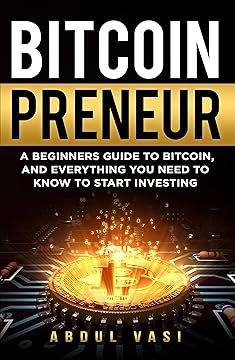 Bitcoinpreneur
A beginner's guide to understanding and investing in Bitcoin and cryptocurrencies.
Bitcoinpreneur
A beginner's guide to understanding and investing in Bitcoin and cryptocurrencies.
Third, automation demands strategy, not replaces it. Every platform, including Google Ads, will push for full AI-controlled campaigns. But AI needs a strategic guardraila clear definition of which platforms play which roles. The marketers role shifts from keyword tweaker to ecosystem architect. If youre just pressing optimize, youve already lost.
Common Questions About PPC and Google Ads
Q: Should I still use Google Ads in 2026?
Absolutely. But not alone. It remains the strongest platform for capturing high commercial intent. Use it as the conversion layer in a multi-platform strategy, not as your sole source of traffic.
Q: What’s a good PPC budget split for a small business in 2026?
A rough starting rule is 50% for awareness/consideration (e.g., social video, connected TV), 30% for mid-funnel and niche search (e.g., Microsoft Ads, Amazon), and 20% for high-intent conversion (Google Search, Performance Max). Adjust based on your sales cycle.
Q: Is Google Ads more expensive than other PPC platforms?
Yes, often significantly. You pay a premium for user intent. That’s why it’s inefficient to use it for top-of-funnel awareness. Use cheaper platforms to build interest, then let Google Ads efficiently convert that interested audience.
Q: Can I just use AI to manage everything?
AI manages campaigns, not strategy. It will optimize for a goal within a platform. Without a human defining the cross-platform strategy and feeding the right data, AI will just efficiently spend your money in the wrong place.
Q: How do I measure success across different PPC platforms?
You must look at a unified dashboard. Track the full customer journey. Key metric: Total Cost per Acquisition (CPA) across all platforms, not the CPA inside Google Ads alone. If adding a platform lowers your overall CPA, it’s working.
Where This Leaves You
Look, the confusion between PPC and Google Ads has always been a trap. By 2026, its a coffin. The businesses that thrive will be the ones that see the paid media landscape for what it is: a diverse, interconnected ecosystem.
Your next step isnt to tweak a keyword bid. Its to step back. Look at your entire customer journey. Identify the three touchpoints where a well-placed ad could move them forward. Fund that. Measure that. Thats your PPC strategy. Google Ads is a part of ita crucial partbut just a part.
The question is no longer which platform to use. Its how you connect them.
