
Advertisement:
With over 25 years of experience as a business consultant, Abdul Vasi has helped countless brands grow and thrive. As a successful entrepreneur, tech expert, and published author, Abdul knows what it takes to succeed in today’s competitive market.
Whether you’re looking to refine your strategy, boost your brand, or drive real growth, Abdul provides tailored solutions to meet your unique needs.
Get started today and enjoy a 20% discount on your first package! Let’s work together to take your business to the next level!
Quick Answer:
By 2026, marketplace seller services in Dubai will be dominated by three core needs: AI-driven logistics and inventory management, hyper-localized content and compliance support for the GCC market, and integrated financial services that handle multi-currency, VAT, and cross-border payments seamlessly. The old model of just getting a license and listing products is dead. You will need a partner, not just a service provider, to navigate the new rules of engagement.
The Real Question Isn’t What You Sell, But Who You Sell Through
Youre sitting in a cafe in Business Bay, looking at your phone. Your Amazon.ae dashboard shows sales, but the numbers arent growing. Not like they should. Youve got a product, youve got a license, youre on the platform. So why does it feel like youre just treading water? I see this look all the time. The frustration isn’t about effort. Its about direction. The landscape for marketplace seller services in Dubai is shifting under everyone’s feet, and by 2026, the game will be completely different. Its no longer about just “getting online.” Its about building a system that works while you sleep, specifically for this region. Let’s talk about what that actually means.
Why Most Marketplace Seller Services in Dubai Miss the Mark
Here is the thing about the current ecosystem that nobody tells you straight: its built for 2019. Most providers are still selling you a checklist. Company formation. Bank account. Product photography. Listing upload. Done. They treat the marketplace as a digital shelf. But a shelf is passive. It just sits there. The real marketplace of 2026 is a dynamic, AI-driven ecosystem that rewards velocity and relevance, not just presence.
Where do sellers get stuck? They outsource their “digital” to an agency that treats Noon and Amazon like global templates. The content is generic. The ads are translated, not transcreated. The logistics setup cant handle a sudden spike from a Saudi customer during Ramadan. The financial reporting is a monthly Excel nightmare because the provider never integrated your marketplace payouts with your local VAT filings. You end up with a presence, not a business. Youre paying for activity, not strategy. And activity, by itself, is just expensive noise.
A founder I worked with last yearlet’s call him Rizwancame to me with a “successful” home goods brand. He was on all the platforms, using a popular seller service. His problem? He was drowning in stock in his Jebel Ali warehouse while his best-selling items were constantly out of stock on Amazon.ae. His service providers solution? “Order more and wait 60 days for shipping.” I looked at his data. The issue wasn’t quantity, it was placement. His provider had all his inventory in one UAE warehouse. When a customer in Riyadh ordered, it shipped from Dubai, taking days and costing a fortune. The algorithm demoted his listing because delivery promises were slow. We shifted to a distributed inventory model, using a service that placed stock in the UAE and KSA simultaneously. Sales in Saudi Arabia tripled in 90 days. His old provider was managing logistics. He needed someone managing demand.
The 2026 Playbook: Three Services You Can’t Ignore
So what does a winning approach look like? Its not a longer checklist. Its a deeper integration. You need services that act as a central nervous system for your marketplace operations, not just limbs.
First, you need Predictive Logistics Intelligence. This goes beyond storage and shipping. By 2026, the winning service will use AI to analyze search trends, seasonal spikes in the GCC, and even local events (like Dubai Shopping Festival or Saudi National Day) to predict where your inventory needs to be, and when. It will automatically split your shipment between fulfillment centers in the UAE, Saudi Arabia, and possibly Kuwait before you even get the order. The goal is one-day delivery promises across the peninsula, which the algorithms will reward with massive visibility.
Second, Cultural Localization & Compliance as a Service. Google-translated Arabic listings will get you banned by 2026. Platforms are getting sophisticated. You need a service that provides native Arabic copywriters from the region, who understand the nuances between Emirati, Saudi, and Egyptian colloquialisms. Theyll handle not just product descriptions, but customer service in dialect, and crucially, keep your listings updated with every change in Emirates Authority for Standardization & Metrology (ESMA) or Saudi Standards, Metrology and Quality Organization (SASO) regulations. Your product compliance is your responsibility, but a great service makes it their operational duty.
Third, Unified Financial Orchestration. This is the silent killer for most sellers. Youre getting paid in AED from Noon, in USD from Amazon, maybe in SAR from a direct website. You have to pay VAT in the UAE, maybe corporate tax soon, and your suppliers in China. A 2026-ready service will offer a unified wallet. It aggregates all your marketplace payouts, auto-converts currencies at the best rates, sets aside VAT liabilities per transaction, and gives you a real-time P&L dashboard. It turns financial chaos from a monthly accounting headache into a daily strategic dashboard.
“In 2026, your biggest competitor won’t be another seller. It will be the marketplace algorithm itself. The right marketplace seller services in Dubai won’t help you list products; they’ll help you speak the algorithm’s languagethe dialect of speed, relevance, and seamless compliance.”
Abdul Vasi, Digital Strategist
The Old Way vs. The 2026 Way
Look, the shift is fundamental. It’s moving from a transactional, task-based relationship to a strategic, integrated partnership. Heres how the thinking changes:
| The 2020 Model (Task-Based) | The 2026 Model (System-Based) |
|---|---|
| Warehousing: Rent a shelf in a Dubai warehouse. | Logistics Intelligence: AI-driven distributed inventory across GCC hubs. |
| Content: Translate English listings to basic Arabic. | Localization: Create culturally-resonant content & CS for each GCC market. |
| Finance: Monthly spreadsheet reconciliation of payouts. | Orchestration: Real-time unified wallet with auto-VAT & tax provisioning. |
| Goal: Get your products listed online. | Goal: Optimize your entire supply-to-cash cycle for algorithmic favor. |
| Relationship: Vendor-client. You manage them. | Relationship: Integrated partner. They manage key operations. |
The difference is ownership. The old model leaves you holding all the operational risk and complexity. The new model provides a service that owns the complexity, giving you back clarity and control.
What Changes on the Ground in 2026
Lets get specific about the near future. Based on the vectors Im seeing, here are three concrete shifts that will redefine marketplace seller services in Dubai.
First, Shelf Space Becomes Algorithmic Real Estate. Winning the buy box wont be about having the lowest price. It will be about having the highest service score a composite metric of your delivery speed (to the customers specific emirate or city), return rate, customer review sentiment in Arabic, and compliance status. Services will be graded and sold on their ability to boost this score for you.
Second, Cross-Border Becomes Default, Not an Option. Selling from a UAE base to Saudi Arabia, Qatar, and Oman wont be a special channel. It will be the default setting. Your service provider must have the legal, logistical, and financial plumbing already built to treat the GCC as a single, segmented market. If theyre still talking about exporting to KSA, theyre already behind.
Explore Abdul Vasi's Books on Amazon
 Entrepreneurship Secrets for Beginners
Gain insights into launching and running a successful business from scratch.
Entrepreneurship Secrets for Beginners
Gain insights into launching and running a successful business from scratch.
 The Social Media Book
Explore the benefits, challenges, and impact of social media on today’s world.
The Social Media Book
Explore the benefits, challenges, and impact of social media on today’s world.
 Tranquility
Discover pathways to inner peace and resilience in a chaotic world.
Tranquility
Discover pathways to inner peace and resilience in a chaotic world.
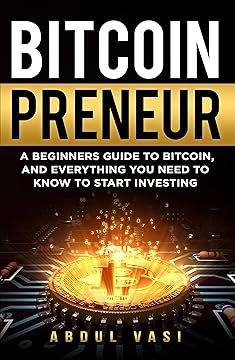 Bitcoinpreneur
A beginner's guide to understanding and investing in Bitcoin and cryptocurrencies.
Bitcoinpreneur
A beginner's guide to understanding and investing in Bitcoin and cryptocurrencies.
Third, Data Portability Becomes Your Most Valuable Asset. You dont own the marketplace customer data. But you own your sales, inventory, and ad performance data. The best services will give you clean, actionable data exports and dashboards that you truly own, allowing you to model scenarios, predict cash flow, and even use that data to secure better financing. Your service partner becomes your data steward.
Common Questions About marketplace seller services in Dubai
Q: What is the most important service a marketplace seller in Dubai should look for in 2026?
Without a doubt, integrated GCC logistics intelligence. Speed to customer is the primary ranking factor. A service that can strategically place your inventory to enable next-day delivery across the Gulf will give you an unbeatable algorithmic advantage.
Q: How much will these advanced marketplace seller services cost compared to today?
You’ll pay 30-50% more for a top-tier, integrated service partner. But the ROI shifts from cost-saving to revenue-generating. You’re not paying for tasks; you’re investing in a system that increases your visibility, conversion, and repeat purchase rate.
Q: Can I still manage my marketplace sales in-house without a service provider in 2026?
Technically, yes. Strategically, it will be like building your own car to commute. The complexity of multi-platform sales, GCC compliance, and algorithmic competition will demand specialized tools and knowledge that make a dedicated service partner essential for scale.
Q: Will I be locked into one service provider for all marketplaces?
The best providers will offer a unified dashboard for Noon, Amazon, and others. However, avoid contracts that force exclusivity. Your service should be a central command hub that connects to all platforms, giving you flexibility, not locking you in.
Q: How do I vet a potential marketplace seller service partner for future readiness?
Ask them three things: 1) Show me your AI-driven inventory forecasting model. 2) Can you provide a live demo of your real-time financial dashboard? 3) Introduce me to your in-house Arabic localization team. Their answers will tell you everything.
Your Next Move
The window to adapt is still open, but its closing. By the time 2026 arrives, the new rules will already be in play. The sellers winning then are the ones building their operational backbone now. This isn’t about panic; it’s about prioritization. Stop looking for someone to just execute your list. Start looking for a partner who can show you the list you haven’t even thought of yetthe one that matters for the next five years. The question to ask yourself today is simple: Is my current setup a cost center I manage, or is it a profit engine that runs itself?
