
Advertisement:
With over 25 years of experience as a business consultant, Abdul Vasi has helped countless brands grow and thrive. As a successful entrepreneur, tech expert, and published author, Abdul knows what it takes to succeed in today’s competitive market.
Whether you’re looking to refine your strategy, boost your brand, or drive real growth, Abdul provides tailored solutions to meet your unique needs.
Get started today and enjoy a 20% discount on your first package! Let’s work together to take your business to the next level!
Quick Answer:
Corporate branding in the UAE involves building a company’s reputation and identity in a market defined by rapid change, global ambition, and deep local nuance. It’s not just a logo and a slogan; it’s the strategic alignment of your company’s purpose with the expectations of a digitally-native, culturally-aware audience. For a sustainable impact, you need a 12-18 month plan that integrates cultural intelligence, digital-first storytelling, and a commitment to tangible value beyond profit.
The Real Question You Should Be Asking
Youre not really asking what corporate branding involves. I know that.
What youre asking is: how do I make my company matter here? How do I stand out in a skyline already full of giants, in a market where a new competitor launches every week? Thats the real question behind any search for corporate branding in the UAE.
Ive sat across from founders and CEOs for 25 years. The good ones have the same look. Its not confusion. Its pressure. The pressure of knowing you have a great product, a solid team, but this nagging sense that your companys storyits very identityis getting lost. Its just another name in a directory. Another logo on a website.
That feeling is your starting point. Lets talk about why most efforts to fix it fail, and what actually works.
Why Most Corporate Branding Efforts in the UAE Are Just Expensive Wallpaper
Look, the standard playbook is broken. It goes like this: hire an agency, do a workshop, get a shiny new logo, a brand book full of fonts and colors, a generic tagline about excellence or future, and launch it all with a fancy party. Then everyone goes back to business as usual.
Six months later, the CEO calls me. Abdul, we did the branding. Why do we still feel invisible?
Heres what went wrong. First, they treated branding as a cosmetic projecta coat of paint. They didnt connect it to how the company actually operates, how it hires, how it answers the phone, how it handles a complaint. The brand promise was innovation, but their customer portal was from 2015.
Second, and this is critical in the UAE, they missed the cultural layer. They either slapped a falcon or a dhow on everything, treating local culture as a decorative element, or they ignored it completely and sounded like a global manual with the location finder switched to Dubai. Neither works. The audience here, especially by 2026, is hyper-aware of authenticity. They can smell tokenism from a mile away.
The third failure is the digital disconnect. Your brand isnt what you say it is on your About Us page. Its what Google says it is. Its what people say about you in a WhatsApp group. Its the experience of finding you, dealing with you, and talking about you online. Most corporate branding projects stop at the offline world. Thats where they die.
A founder I worked with last year was exasperated. He ran a successful B2B tech firm, servicing major projects across the Gulf. Hed invested in a full rebrandbeautiful minimalist logo, sleek website, the works. We look like a billion-dollar company, he said. But he wasnt getting the meetings he wanted. The big players still saw him as a vendor, not a partner. We dug in. I asked him, When a project manager from a leading developer Googles your company, what do they find? He looked at his beautiful site. I searched. The top results were a few dry news mentions and some outdated listings. There was no narrative of expertise, no proof of thought leadership, no human face to the brand. The website was a brochure. His brand, in the digital world where decisions start, was hollow. We had to rebuild it from the search results up, not from the logo down.
The Approach That Actually Builds a Lasting Brand
So what works? Its less about a campaign and more about building a system. A living, breathing identity. Heres how I frame it.
Start from the inside. Your employees are your first audience. If they dont understand and believe in what the brand stands for, no customer ever will. This means your brand purpose cant just be a line for marketing. It has to be reflected in how you reward people, how you make decisions, the projects you take on. A logistics company that brands itself on reliability but has a toxic, high-turnover culture is building on sand.
Next, map your brand to the customers journeythe real one, not the pretty funnel in a deck. Where do they first hear about you? Likely LinkedIn or a Google search. What do they find? Is it a sterile corporate page, or is it content that solves a problem they have right now? Your branding effort must include dominating that first touchpoint with value. That means investing in content that demonstrates your knowledge, not just your services.
Then, bake cultural intelligence into your core message, not just your imagery. Understand the aspirations here. Its not about using local symbols; its about aligning with local valuesambition, hospitality, respect, forward-thinking. A brand that talks about building legacies or fostering growth in a way that resonates with both a 25-year-old Emirati entrepreneur and a 45-year-old expat project director? Thats hitting the mark.
Finally, integrate everything. Your brand voice on your website should match your brand voice on a customer service call, which should match the tone of your CEOs LinkedIn post. This consistency is what builds trust. And in a transient market, trust is your single most valuable asset.
Its a continuous process, not a one-off project. Youre not launching a brand. Youre cultivating a reputation, day by day.
“In the UAE, your corporate brand is your handshake, your reputation, and your business cardall at once. It has to work in a boardroom in the DIFC, on a smartphone in Sharjah, and in a conversation at a majlis. If it only works in one of those places, it’s not a brand. It’s a costume.”
Abdul Vasi, Digital Strategist
The Cosmetic Rebrand vs. The Integrated Identity
Let’s make this concrete. Heres how the old way stacks up against the approach that builds real equity.
| The Cosmetic Rebrand | The Integrated Identity |
|---|---|
| Focus is on visual assets (logo, colors, website). | Focus is on core narrative and customer experience. |
| Culture is an afterthought, added as imagery. | Cultural insight drives the messaging strategy. |
| Digital presence is a separate “channel.” | Digital footprint is the primary brand home. |
| Launch is a big-bang event, then activity fades. | Launch is the start of a sustained content & engagement plan. |
| Success is measured by “likes” and logo recognition. | Success is measured by search authority, talent attraction, and deal quality. |
The difference is between making noise and building a signal. One is expensive. The other is an investment.
Explore Abdul Vasi's Books on Amazon
 Entrepreneurship Secrets for Beginners
Gain insights into launching and running a successful business from scratch.
Entrepreneurship Secrets for Beginners
Gain insights into launching and running a successful business from scratch.
 The Social Media Book
Explore the benefits, challenges, and impact of social media on today’s world.
The Social Media Book
Explore the benefits, challenges, and impact of social media on today’s world.
 Tranquility
Discover pathways to inner peace and resilience in a chaotic world.
Tranquility
Discover pathways to inner peace and resilience in a chaotic world.
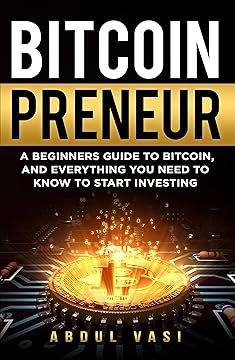 Bitcoinpreneur
A beginner's guide to understanding and investing in Bitcoin and cryptocurrencies.
Bitcoinpreneur
A beginner's guide to understanding and investing in Bitcoin and cryptocurrencies.
What Changes for Corporate Branding in the UAE by 2026
Looking ahead, the ground is shifting. The companies that get this right will pull even further ahead. Heres what I see.
First, the CEO as Chief Storyteller becomes non-negotiable. The anonymous, faceless corporation is losing trust. By 2026, stakeholdersclients, talent, partnerswill demand a human connection. They want to hear from the leadership directly, authentically, on platforms like LinkedIn. The polished corporate press release wont cut it. The brand will be inextricably linked to the leaders digital persona.
Second, AI-generated genericism will create a premium for authentic human voice. As AI floods the zone with competent, bland content, a brand with a distinct, recognizable, and human point of view will stand out like a beacon. Your brands voice wont be a section in a guideline; it will be your primary filter for all communication.
Third, sustainability and social impact transition from CSR modules to brand pillars. Its no longer a nice-to-have section on the website. For the UAE, with its clear national agendas like Net Zero 2050, your brands tangible commitment to these goals will be a key reputational driver. But it has to be real, woven into operations, or youll be called out for greenwashing. The brand will be judged on action, not aspiration.
Common Questions About corporate branding in the UAE
Q: How much does corporate branding in the UAE cost?
There’s no fixed price. A superficial logo-and-website job can be AED 50k. Building a true, integrated identity system that drives business starts around AED 200k and scales with complexity. View it as a strategic investment, not a marketing expense.
Q: How long does a full corporate rebrand take?
The foundational strategy and visual identity can take 3-4 months. The real workembedding it across all touchpoints and building digital authorityis a continuous 12-18 month effort. True branding is a marathon, not a sprint.
Q: Is it different for a family-owned business vs. a startup?
Absolutely. A family business brand must honor legacy while signaling modernity and governance. A startup brand must project scalability and innovation from day one. The core principles are the same, but the narrative emphasis shifts dramatically.
Q: Can a strong corporate brand help with recruiting in the UAE?
More than anything else. In a competitive talent market, top candidates choose a company based on its reputation and mission. A powerful, clearly communicated brand is your best talent magnet, reducing hiring costs and attracting better fits.
Q: Do I need a big international agency for this?
Not necessarily. Big agencies often bring a global template. What you need is a partner with deep regional insight, digital-first execution, and a focus on business outcomes, not just awards. Sometimes the best fit is a strategic lead (like me) working with specialized local talent.
Where Do You Start?
You start by being brutally honest. Look at your last five customer interactions. Look at your search results. Look at what your employees say about the company.
That gap between what you hope your brand is and what it actually is today? Thats your project brief. Dont start with a mood board. Start with that gap.
The goal isnt to be the biggest name in your sector. The goal is to be the most relevant, the most trusted, the first that comes to mind when a specific problem needs solving. In the UAEs fast-forward economy, that relevance is the only thing that guarantees youre not just another logo on the wall, but a lasting part of the story.
So, whats the first chapter of your story going to be?
