

Advertisement:
With over 25 years of experience as a business consultant, Abdul Vasi has helped countless brands grow and thrive. As a successful entrepreneur, tech expert, and published author, Abdul knows what it takes to succeed in today’s competitive market.
Whether you’re looking to refine your strategy, boost your brand, or drive real growth, Abdul provides tailored solutions to meet your unique needs.
Get started today and enjoy a 20% discount on your first package! Let’s work together to take your business to the next level!
Most SEO advice is outdated the moment it’s published. By 2026, the playbooks from 2023 will be as useful as a map of a city that’s been bulldozed.
The core of search is changing. It’s no longer about just keywords and backlinks. The game is about intent, context, and a fundamental shift in how we think about visibility. The opportunity for SEO and search marketing in 2026 is massive, but only if you stop playing yesterday’s game.
If you’re still chasing “top 10 keywords,” you’ve already lost. This guide is about what comes next.
The Problem
Businesses fail because they’re solving for Google, not for people. They see search as a technical puzzle to be hacked, not a human conversation to be joined.
In 2026, the biggest failure is a lack of strategic patience. Founders want a “campaign.” They want to “do some SEO.” They treat it like a PPC ad buy, expecting linear results from a non-linear system. They pour money into AI-generated content farms, creating thousands of pages that sound smart but say nothing.
They ignore the seismic shift: search is becoming a multi-modal, multi-interface experience. Voice, visual, and AI-agent searches are blending. Optimizing for a ten-blue-links SERP is like optimizing for a fax machine. The goalposts have moved, and most teams are still kicking from the old spot.
Let me tell you about a founder I worked with recently. He ran a B2B SaaS platform. His team had used an AI tool to churn out 500 “comprehensive” blog posts targeting every long-tail keyword they could find. Their traffic flatlined. Why? The content was generic. It answered questions no one was asking in their market. It had all the right keywords but zero unique insight, zero real-world application. We scrapped 80% of it. We focused on 20 detailed guides based on actual customer support tickets and sales calls. We stopped writing for search bots and started writing for the stressed CTO looking for a solution at 2 AM. Within a quarter, qualified lead volume from search tripled. The lesson for SEO and search marketing in 2026 is brutal: volume is worthless without relevance.
The Strategy
Forget tactics first. Build a system. Here’s the framework I use.
Step 1: Intent Mapping, Not Keyword Research. Don’t list keywords. List user missions. What job is someone hiring your content or product to do? Map every piece of content to a specific, high-intent mission stage (awareness, consideration, decision).
Step 2: Build Content Hubs, Not Blog Posts. Isolate a core topic your business owns. Create a definitive, flagship “pillar” resource. Then, support it with interconnected, deep-dive “cluster” content that answers every adjacent question. This signals topical authority to algorithms built for understanding context.
Step 3: Engineer for E-E-A-T, Not Just Links. Experience, Expertise, Authoritativeness, Trustworthiness. This is your content blueprint. Showcase real user experiences. Feature credentialed experts. Cite reputable sources. Make trust a design element, not a buzzword.
Step 4: Optimize for AI Agents and Searchers. Structure data clearly using schema. Answer questions directly in the first 100 words. Format for voice search (concise, natural language). Assume a smart assistant will be summarizing your page for a user.
Step 5: Measure Impact, Not Just Traffic. Track keyword rankings for ego. Track conversion value, lead quality, and customer retention for your business. Align search goals with revenue goals. Period.
“In 2026, winning at SEO and search marketing means building a library, not a billboard. You’re curating a trusted resource that both humans and algorithms recommend, not just indexing a page.”
Abdul Vasi, Digital Strategist
Amateur Hour vs. Professional Playbook
| Aspect | Amateur Approach (2026) | Pro Approach (2026) |
|---|---|---|
| Content Creation | Uses AI to mass-produce generic articles targeting keyword volume. | Uses AI for research and drafting, but final content is edited by a subject-matter expert for unique insight. |
| Link Building | Still buys links from directories or uses sketchy outreach templates. | Builds digital PR campaigns around original data studies to earn authoritative, relevant mentions. |
| Technical SEO | Only cares about site speed and mobile-friendliness. | Implements advanced schema for products, FAQs, and how-tos; optimizes for Core Web Vitals *and* page experience signals. |
| Measurement | Obsesses over #1 rankings for low-volume keywords. | Tracks “Search-Driven Revenue” and the percentage of total business qualified leads coming from organic. |
| Mindset | Views SEO and search marketing in 2026 as a cost center or a quick traffic fix. | Views it as a long-term brand equity and customer acquisition channel, integral to product marketing. |
Advanced Tactics for 2026
1. The “Zero-Click” Content Strategy. Accept that many searches will be answered directly by AI overviews. Your goal is to be the cited source. Structure your content with clear, authoritative answers that are easily extracted. Become the source of truth the AI pulls from.
2. Optimize for Search Journeys, Not Single Queries. Users don’t type one query. They have a conversation with search across devices. Use analytics to stitch together these multi-session, multi-query journeys. Create content that guides them from problem to solution across several touchpoints.
Explore Abdul Vasi's Books on Amazon
 Entrepreneurship Secrets for Beginners
Gain insights into launching and running a successful business from scratch.
Entrepreneurship Secrets for Beginners
Gain insights into launching and running a successful business from scratch.
 The Social Media Book
Explore the benefits, challenges, and impact of social media on today’s world.
The Social Media Book
Explore the benefits, challenges, and impact of social media on today’s world.
 Tranquility
Discover pathways to inner peace and resilience in a chaotic world.
Tranquility
Discover pathways to inner peace and resilience in a chaotic world.
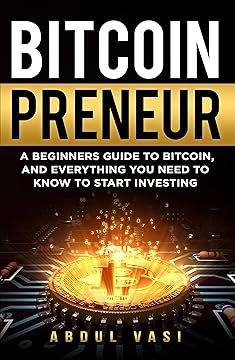 Bitcoinpreneur
A beginner's guide to understanding and investing in Bitcoin and cryptocurrencies.
Bitcoinpreneur
A beginner's guide to understanding and investing in Bitcoin and cryptocurrencies.
3. Own Your Niche’s “Entity Graph.” Search engines understand the world as a graph of connected entities (people, places, things). Use schema.org markup relentlessly to define your brand, your key people, your products, and their relationships. Become the definitive node in the graph for your space.
Frequently Asked Questions
Q: Is technical SEO still important for SEO and search marketing in 2026?
Absolutely, but its nature changes. It’s less about crawling and indexing basics and more about structuring data for AI and ensuring flawless page experience across all interfaces (voice, visual, AR).
Q: How much should I budget for SEO and search marketing in 2026?
Think in terms of investment, not cost. Allocate resources comparable to other core marketing channels. The biggest budget item should be expertiseskilled strategists and writers, not cheap tools.
Q: Can AI write all my SEO content now?
AI can write competent, generic content. It cannot write with unique experience, genuine expertise, or build trust. Use AI as a powerful assistant, not a replacement for human insight.
Q: What’s the single biggest ranking factor in 2026?
There isn’t one. It’s the synthesis of user-centric value, demonstrable expertise, and technical clarity. If I had to pick one theme, it’s “authority through usefulness.”
Q: How long does it take to see results?
Initial technical fixes can show impact in weeks. Building genuine authority and seeing sustained traffic and conversion growth is a 6-12 month minimum commitment. There are no shortcuts.
Conclusion
The chaos is the opportunity. While everyone panics about the latest algorithm update, you can build something durable. The fundamentals of SEO and search marketing in 2026 are human fundamentals: be useful, be clear, be trustworthy.
Stop chasing ghosts. Stop optimizing for last year’s Google. Build a resource that serves your audience so well that search engines have no choice but to send people your way. That’s the only strategy that has ever worked, and it’s the only one that will survive to 2026 and beyond.
Your website needs to be the best answer. Not just in Google’s index, but in the real world. Focus there, and the search results will follow.
Ready to Transform Your Digital Strategy?
Let’s discuss how I can help your business grow. 25+ years of experience, one conversation away.
